
Types, Manufacturing Processes, Applications, and Electroplating of Springs
As a factory equipped with professional spring production machinery (including automatic spring forming machines, CNC coilers, etc.), we are capable of producing various types of springs to meet the needs of different industries. This article provides a detailed introduction to the main types of springs, manufacturing processes, typical applications, and the critical surface treatment process - electroplating.
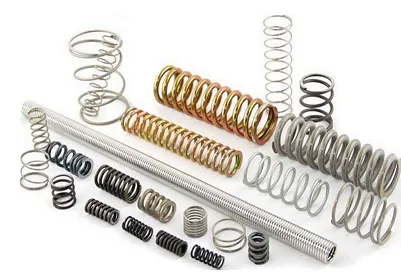
I. Main Types of Springs
Based on load characteristics and structural design, springs are mainly classified into the following categories:
Compression Springs: The most common type, designed to resist compressive forces and shorten under load. They are widely used in shock absorbers, valves, switches, etc.
Extension (Tension) Springs: Designed to resist tensile forces and elongate under load. They usually have hooks or loops at the ends and are used in balancing devices, door mechanisms, etc.
Torsion Springs: Subjected to torque forces, they generate rotational force. Commonly found in clamps, hinges, automotive starter motors, etc.
Special-Shaped Springs: Including conical springs, disc springs, wave springs, etc., suitable for specific spaces or special mechanical requirements.
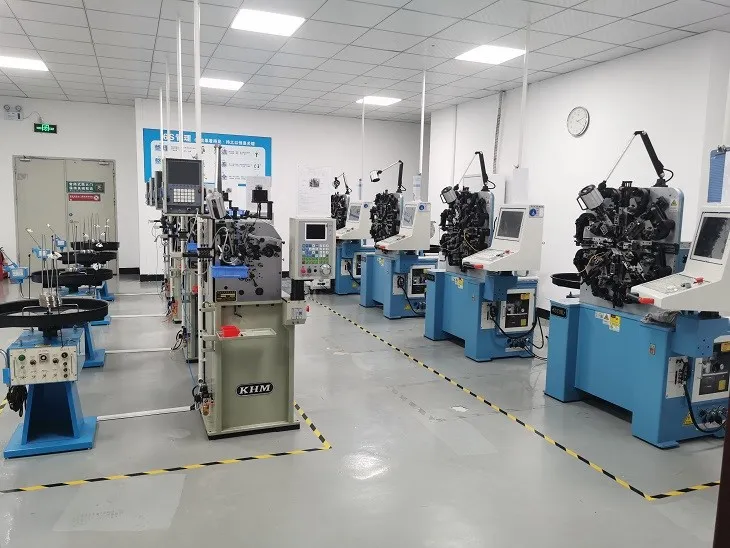
II. Spring Manufacturing Processes
The manufacturing process varies depending on the spring type, but generally includes the following core steps:
Coiling / Forming: Automatic spring coilers are used to wind wire into the desired shape. Compression and extension springs are typically cold-coiled (for smaller wire diameters) or hot-coiled (for larger diameters).
End Grinding: For compression springs, both ends are often ground flat to ensure perpendicularity and uniform load distribution.
Heat Treatment: Through quenching and tempering, internal stresses are relieved, and elastic limits and fatigue life are improved. This is a critical step for spring performance.
Stress Peening: High-speed shots impact the spring surface to create compressive residual stress, significantly enhancing fatigue resistance.
End Forming: Extension springs require hook formation, and torsion springs require arm formation.
III. Application Scenarios of Springs
Springs are virtually everywhere, with major application fields including:
Automotive Industry: Suspension systems, engine valve springs, brake mechanisms, seat adjusters, etc.
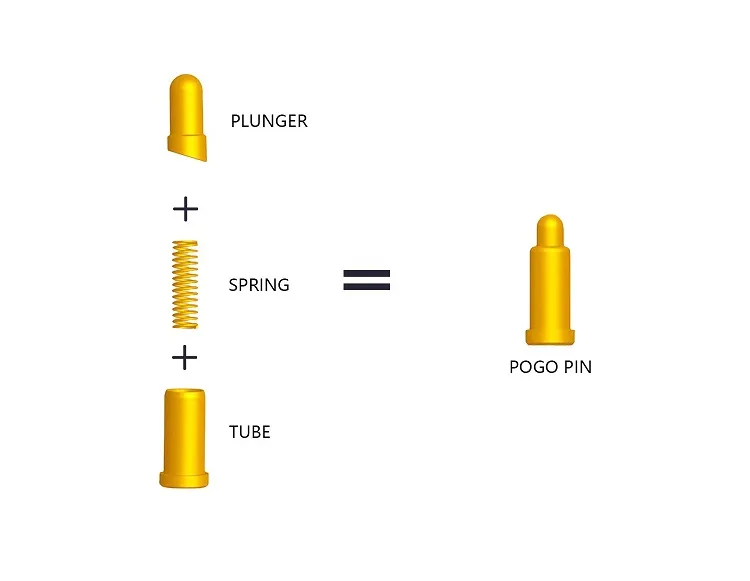
Electronics & Appliances: Switches, relays, battery contacts, connectors, remote controls, etc.
Mechanical Engineering: Shock absorbers, valves, pumps, fixtures, industrial robots.
Daily Life: Mattresses, ballpoint pens, lighters, door locks, toys.
Medical Devices: Surgical instruments, ventilators, precision springs in rehabilitation equipment.
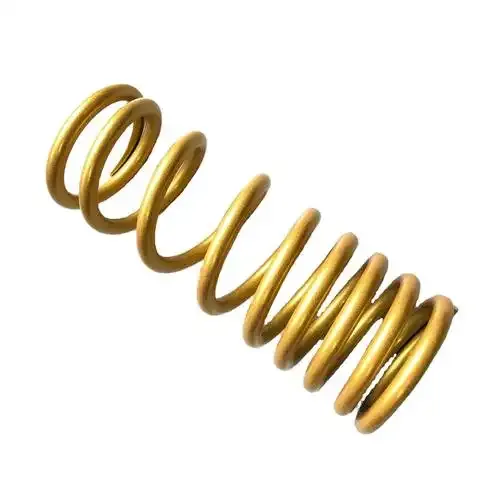
IV. Electroplating Process for Springs
To improve corrosion resistance, wear resistance, and appearance, electroplating is a common surface treatment. The main process steps are as follows:
Surface Pretreatment: Removal of oil, scale, and rust. This includes chemical degreasing, acid pickling, and activation.
Electroplating: Springs are immersed in a plating solution containing metal ions (e.g., zinc, nickel, chromium). Direct current is applied to deposit the metal onto the spring surface.
Zinc Plating: Most common, low cost, good rust prevention. Can be combined with passivation (blue-white, yellow, black).
Nickel Plating: Brighter, higher hardness, good wear resistance. Suitable for electronic and decorative uses.
Chromium Plating: Very hard, excellent corrosion resistance. Used for demanding environments.
Hydrogen Embrittlement Relief: The electroplating process may introduce hydrogen embrittlement risks for high-strength springs. Immediate baking at around 200°C (dehydrogenation) is necessary to eliminate this risk.
Sealing / Passivation: Forms a protective film to further improve salt spray resistance and corrosion protection.
Conclusion
Though small in size, springs are critical components in industrial equipment and everyday products. With our advanced coiling equipment, complete heat treatment, and surface treatment capabilities (especially electroplating and hydrogen embrittlement control), our factory can deliver high-quality, long-life springs of various types. Please contact us to customize your spring solution.