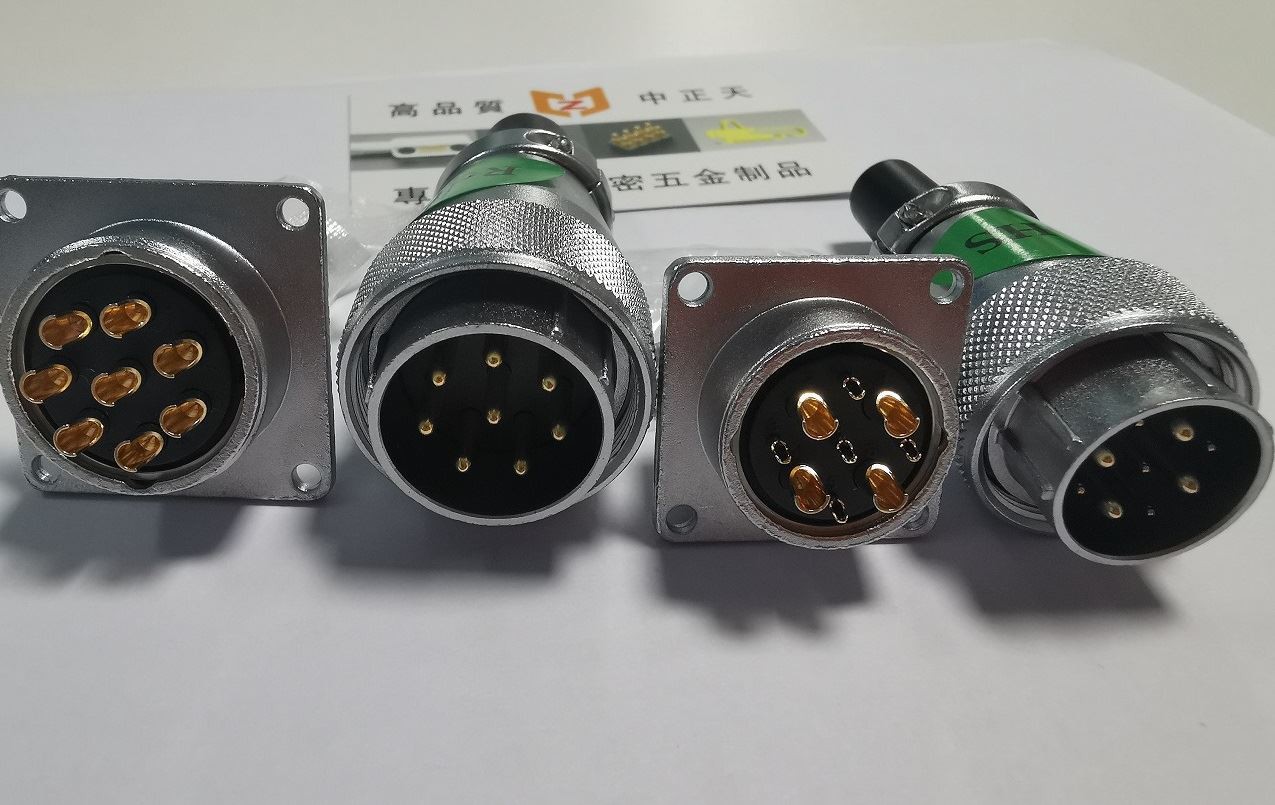
Special Pogo Pin Connectors
The selection of special connectors includes the use of environmental conditions, electrical parameters, mechanical parameters, termination methods, etc. The correct selection is a prerequisite for good use, and correct use is also essential. Correct use is to ensure the product The key to reliability. We will provide users with high-quality products, but also hope that users choose and use our products well.
One. Environmental conditions for use:
1. Ambient temperature refers to the environment in which the product works, and should be used within the ambient temperature specified by the product. Even if the external environment temperature is not high, if the product is working in the chassis, the poor heat dissipation conditions and the heating of other components will cause the ambient temperature of the product to be much higher than the external ambient temperature. Exceeding the specified ambient temperature will damage the metal plating or insulator, and at the same time, too low temperature will also cause the insulator to crack, which will eventually reduce the performance of the connector or lose its function.
2. Moisture or water-Moisture or water will cause a water film to form on the surface of the insulator, which will reduce the insulation performance and even cause misconduct between adjacent contacts. Generally, connectors that are used in high humidity or water conditions for a long time should use sealing connectors.
3. Low air pressure: The air pressure will decrease under high-altitude conditions (except in the constant air pressure-sealed chamber). When the product is under low air pressure conditions, the product's medium withstands voltage will drop. If the transmitted voltage is higher than the product technical conditions, there will be an Electrical breakdown that may occur, causing failure.
4. Corrosion environment: refers to the atmosphere around the product, such as the sea with severe salt spray, the storage warehouse of chemical raw materials with severe acid and alkali, etc. These conditions will cause corrosion and erosion on the metal parts of the connector, insulators, etc., when selecting You should pay attention to special requirements to the manufacturer or choose products that can meet your requirements. At the same time, it should be noted that the plastic parts of some connectors are not resistant to solvents such as banana water, benzene, acetone, etc. Please pay attention to the regulations in the product catalog.
5. Mechanical conditions: refers to the mechanical effects of vibration, impact, collision, acceleration, etc., which are selected according to the parameters in the product sample. Generally speaking, the mechanical parameters of twist needles in similar products are relatively high and easy to guarantee. Note that in actual use, after the cable and the contact are terminated, the cable should be fixed by a wire clamp or other means. If the cable is too long and has no fixing measures, it will endanger the cable under external effects such as vibration or shock. It is safe, and in serious cases, it will cause damage to the connector and cable breakage.

Second. Termination method
Termination mode refers to the connection mode of the cable and the connector. Generally, there are many kinds. The selection should be based on the actual conditions of use, reliability and other requirements, and existing conditions.
A. Crimping: high mechanical strength, good environmental resistance, good electrical performance, high reliability, but poor flexibility, suitable for occasions where the properties of the cable have been determined;
B. Winding: A special winding gun or special equipment is required to complete the termination, and the reliability is high;
C, pierced connection: mainly used for ribbon cables in printed boards, no need to wire, low cost, but the specified wire gauge must be used;
D. Welding: It is easy to form a virtual weld that is not easy to check due to the welding method, weldability, and other reasons, but it has the advantages of high flexibility and simple operation. Crimping and winding are relatively reliable termination methods and are recommended.

Three, electrical parameters
1. Contact resistance: Mainly consider the loss of inline transmission, especially the signal voltage. Because the signal amplitude is not high, if the contact resistance is large, the voltage drop on it will be large, and the signal will be attenuated, which is not good for transmission. The connector with a twist pin can better ensure its contact reliability because of its multi-point contact, especially for the transmission of low voltage and small current.
2. Rated voltage: also called rated working voltage, which refers to the voltage that can be applied for a long time between components that are insulated from each other. Long-term operation at a voltage higher than the rated voltage will deteriorate the insulation performance of the insulator or damage the insulator and cause the connector to fail.
3. Rated current: It is also called rated working current. The value of the rated current has been determined during the thermal design of the product. Excessive current will cause overheating and damage the insulator or soften the coating of the contact to form a fault. The use current cannot be increased at will. In order to require high reliability, attention should be paid to derating. Generally, it can be considered at 75-85% of the rated current.
4. Shielding: Due to the high-density installation of the whole machine and external electromagnetic radiation, a metal shell is generally used to shield the external and internal electromagnetic radiation. Pay attention to the good grounding of the metal shell.
5. Impedance matching: For coaxial connectors used to transmit high frequency or radio frequency signals, the important thing is to pay attention to the characteristic impedance. Usually, there are two kinds of characteristic impedance, 75Ω and 50Ω. The result of improper selection is that the signal is greatly attenuated (reflected).