
What is the method of electroplating?
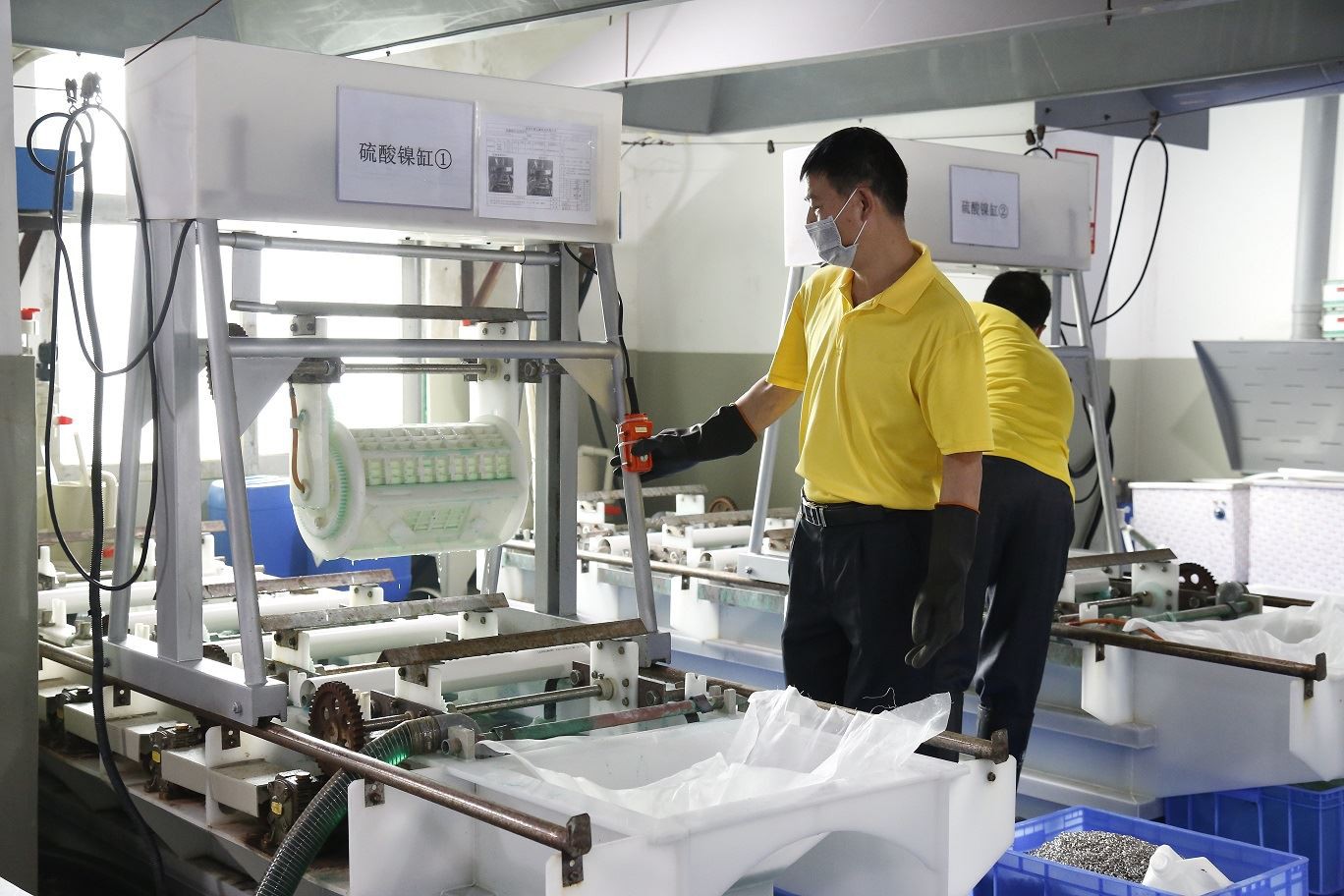
Electroplating is divided into rack plating, barrel plating, continuous plating, and brush plating, which are mainly related to the size and batch of the parts to be plated.
Rack plating is suitable for products of general sizes, such as car bumpers, bicycle handlebars, etc. Barrel plating is suitable for small parts, such as fasteners, washers, pins, etc. Continuous plating is suitable for batch production of wires and strips. Brush plating is suitable for partial plating or repair. The electroplating solution includes acidic, alkaline, and acidic and neutral solutions with chromium mixture. No matter what plating method is used, the plating tanks and hangers in contact with the products to be plated and the plating solution should have a certain degree of Versatility.
Coating classification:
The coating is divided into two types: decorative protective coating and functional coating.
Decorative protective coatings: mainly chromium-plated layers on ferrous metals, non-ferrous metals, and plastics, especially copper-nickel-chromium layers on steel, and nickel-chromium layers on zinc and steel. In order to save a pogo pin, people have been able to plate copper-nickel/iron-high-sulfur nickel-nickel/iron-low solid nickel-chromium layer on the steel. The tin/nickel coating similar to the chromium coating can be used on analytical balances, chemical pumps, valves, and flow measuring instruments.
There are many types of functional coatings, such as:
①Plating layer of sliding bearing cover to improve compatibility and embedding with journal, lead-tin, lead-copper-tin, lead-indium, and other composite coatings;
②It is used for hard chromium coating on the wear-resistant medium and high-speed diesel engine piston ring. This coating can also be used on plastic molds, and has the characteristics of non-stick molds and long service life;
③Plating copper on the sliding surface of the large herringbone gear can prevent the sliding surface from picking up early;
④ Galvanizing used to prevent the steel substrate from being corroded by the atmosphere;
⑤ Copper-tin coating to prevent nitriding;
⑥ Tin-zinc coating used for brazing in the manufacture of radios and televisions to prevent corrosion of galvanic cells between steel and aluminum.
Engineering coatings suitable for repair and manufacturing include chromium, silver, copper, etc., and their thickness is relatively large, and the hard chromium layer can be as thick as 300 microns.
The electroplating process is basically as follows:
1 Connect the plated metal to the anode
2 Connect the plated part to the cathode
3 The anode and the cathode are connected by an electrolyte solution composed of the positive ions of the metal plated
4 After the direct current power supply is applied, the metal of the anode will undergo oxidation reaction (loss of electrons), and the positive ions in the solution will be reduced at the cathode (get electrons) into atoms and accumulate on the surface of the negative electrode.
After electroplating, the aesthetics of the electroplated object is related to the magnitude of the current. The smaller the current, the more beautiful the electroplated object will be; otherwise, some uneven shapes will appear.
The main purposes of electroplating include the prevention of metal oxidation (such as rust) and decoration. The outer layer of many coins is also electroplated.
Sewage produced by electroplating (such as ineffective electrolytes) is an important source of water pollution.