
Dragon's head, music, and dance, physical and mental peace
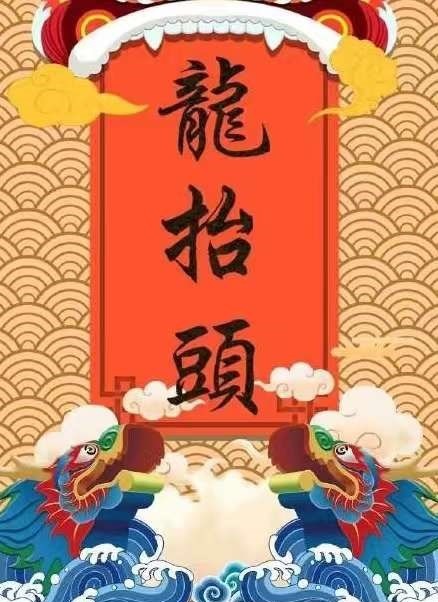
The dragon looks up, so since ancient times, it has been a day of resigning and welcoming the new and welcoming the unknown, which means that everything recovers.

Legend has it that the leading festival originated in the Fuxi era. Fuxi "heavy farmers and mulberry, plowing fields". By the time of King Zhou Wu, a grand ritual was held on the second day of February, calling on the cultural and military officials to be pledged.
February Erlang's head is the most important traditional festival in spring, because the ancients believed that dragons were encouraging things, and it was the master of weathering rain. Only by respecting dragons can we bring good luck to the world.
When "dragon looks up", it means that Yangqi is born and everything is full of life, so since ancient times, when people look up, they will "get up the dragon boat, eat dragon food, pick dragon qi, shave the dragon head". I hope in the new year Lili can move.
To pray for a year of grain and the wind and wind, people will hold a lot of rituals on this day to celebrate the beginning of spring plowing. There are also many customs to hope that the new year can be handled.

What are the customs of dragons?
Customs 1: Gai Longqi.
On the morning of the second day of February, I went out from 5 to 7 o'clock, took a deep breath for the east, and then continued to walk east hundreds of steps. When they met people, they would smile. The people of people believe that the dragon gas is a blessing, wealth, popularity, joy, and luck.
Customs 2: Shaver.
On this day, we have to shave their heads. Children shave their heads, named Xixi, which can bless the child's healthy growth, with no disease, and disaster; adults shave their heads, meaning to say good luck to the new year.
Customs three: worship the land.
Burning incense to respect the land and entering and leaving peace. Many people ignite a fragrance and go around the door for three laps to respect the earth.
Custom four: Dragon lights.
The so-called dragon lamp is usually a boat made of reeds or straws, and a candle is inserted in the river. The people think that this can take the road for the dragon king and bless the harvest for a year.
Customs 5: Eat dragon food.
To pray for blessings, the people they eat on this day are related to the dragon. Eating noodles, called dragon whiskers; eating pork head, called dragon head; eating rice, named dragon seeds; eating pancakes, called dragon scales.
Customs 6: Guide Qianlong.
Put a few coins in the kettle, and then go to the nearby well. Put a pot of water in the flowing river, sprinkle it home all the way, and pour the water and coin into the water tank. According to the people, do so, the dragon will follow the water track.

Custom Seven: Fighting food.
At your yard or door, draw a circle with grass and gray, put the grain grains in it, and then deliberately sprinkle the food outside, implying that the new year symbolizes the new year.
Customs Eight: Open a gift
The third day of February was Wenchang's birthday, and the children started a gift on February 2nd, indicating that they started formally studying. This day, enrollment also means "looking at the dragon", which means that good color heads can make children easier.
The meaning of "dragon look up" cultural inheritance
In ancient folks, dragons were auspicious things, and the master of weathering rain, and later evolved into the symbol of the emperor in court culture. Entering modernity, based on the special status and beautiful meaning of the long history of the Dragon in the Chinese nation, in addition to the existence of folklore expression, Long has also been sublimated to the symbol of national symbols and identity.
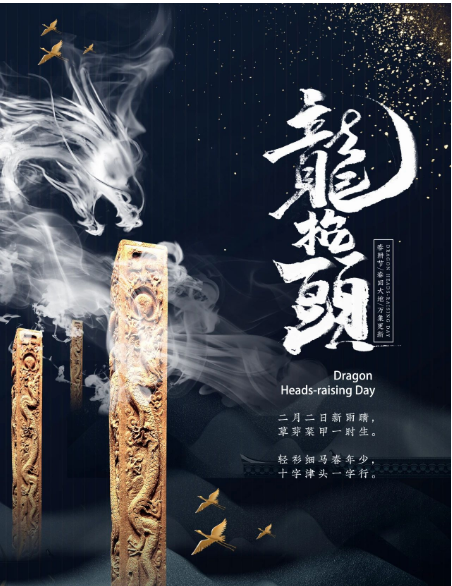
In the long history of the long history, the intention of the dragon has changed and inherited. People's love and awe of the dragon have always existed, so the dragon culture has endless vitality, penetrates various fields of Chinese social culture, describes life in life, describes life in life, describes life in life, describing life in life, describing life in life, describing life in life, describing life in life. Beautiful things or expressions, such as the Longteng Tiger and the Spirit of Longma.
The Dragon's Development Festival has continued to this day and has been given new modern significance. From the development of festivals in the traditional agricultural sense to today's public celebrations, the image of the dragon has changed from early folk beliefs to the current national cultural symbol. The Dragon Bottom Festival not only seeks rain and deworming but also represents the current spirit of people. The eager expectations of starting a new chapter in the new year.