
Chinese Dragon Boat Festival
Dragon Boat Festival, also known as Duanyang Festival, Dragon Boat Festival, Chongwu Festival, Tianzhong Festival, etc., is a folk festival that integrates worshiping gods and ancestors, praying for blessings, warding evil spirits, celebrating entertainment, and eating. The Dragon Boat Festival originated from the worship of natural celestial phenomena and evolved from the sacrifice of dragons in ancient times. On the Midsummer Dragon Boat Festival, Canglong Qiu flew up to the center of the south, and was in the most "righteous" position throughout the year, just like the fifth line of "Book of Changes Qian Gua": "The flying dragon is in the sky". The Dragon Boat Festival is the auspicious day of "Flying Dragons in the Sky", and the culture of dragons and dragon boats has always run through the inheritance history of the Dragon Boat Festival.
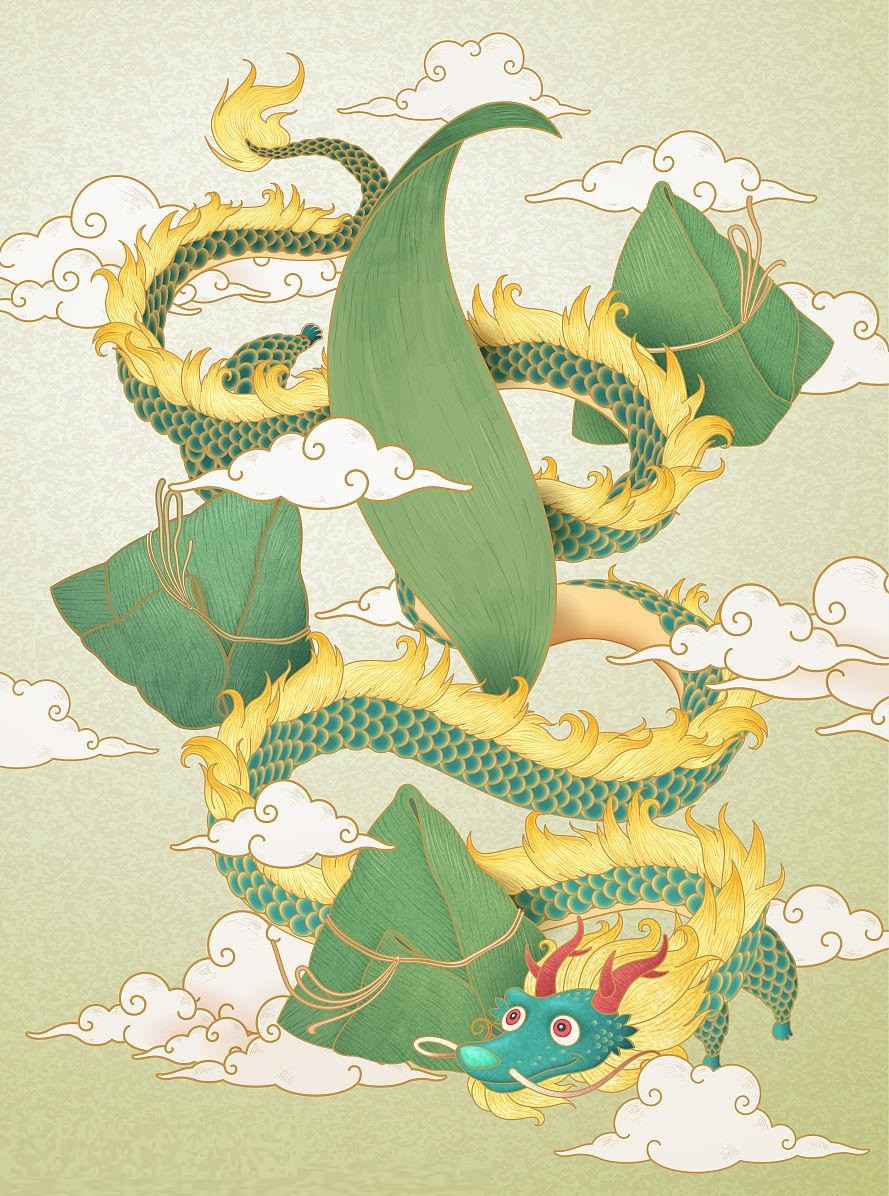
The Dragon Boat Festival originated from the dragon totem sacrifice of the Wuyue tribe in the Jiangsu and Zhejiang regions. It is a traditional cultural festival popular in China and other countries in the cultural circle of Chinese characters. It is said that the poet Qu Yuan of Chu State during the Warring States Period committed suicide by jumping on the Miluo River on the fifth day of the fifth lunar month, and descendants will also celebrate the Dragon Boat Festival. The festival is a festival to commemorate Qu Yuan; there are also sayings to commemorate Wu Zixu, Cao E, and Jie Ziti. The origin of the Dragon Boat Festival covers ancient astrological culture, humanistic philosophy, and other aspects, and contains profound and rich cultural connotations. In inheritance and development, it is mixed with a variety of folk customs. Due to different regional cultures, there are customs and details in different places. difference.

The Dragon Boat Festival, the Spring Festival, the Qingming Festival, and the Mid-Autumn Festival are known as the four traditional festivals in China. The Dragon Boat Festival has a wide influence on the world, and some countries and regions in the world also have activities to celebrate the Dragon Boat Festival. In May 2006, the State Council included it in the first batch of the national intangible cultural heritage lists; since 2008, it has been listed as a national statutory holiday. In September 2009, UNESCO officially approved it to be included in the "Representative List of Intangible Cultural Heritage of Humanity", and the Dragon Boat Festival became the first festival in China to be selected as a world intangible cultural heritage.

The origin of ancient traditional festivals is related to ancient primitive beliefs, sacrificial culture, astronomical phenomena, calendars, and other human and natural cultural contents. According to the research results of modern anthropology and archaeology, there are two most primitive beliefs of human beings: one is the belief in heaven and earth, and the other is the belief in ancestors. Most of the ancient festivals were formed when the ancients chose auspicious days to offer sacrifices to thank the gods of heaven and earth and the kindness of ancestors. The early festival culture reflected the humanistic spirit of the ancients, such as worshiping nature and consolidating the origin and thinking of the source; a series of sacrificial activities contained the profound cultural connotation of respect, gratitude, etiquette, and music civilization. The origin and development of festivals is a process of gradual formation, imperceptible improvement, and popularization. In ancient times, the customs of the north and the south were different. The festivals and customs of the Dragon Boat Festival in the pre-Qin era were rarely recorded in the documents of the Central Plains, and it is impossible to directly verify the origin of the existing documents. Regarding the relevant written records of the Dragon Boat Festival, the word "Dragon Boat Festival" first appeared in the "Fengtu Ji" of the Jin Dynasty, but the custom of the Dragon Boat Festival has already existed, such as the custom of dragon boat racing and sacrifice, which has long existed.

Traditional folklore
The Dragon Boat Festival is a very popular folk festival in China. Celebrating the Dragon Boat Festival has been a traditional custom of the Chinese nation since ancient times. Due to the vast area and many stories and legends, not only many different festival names have been produced, but also various places. different customs. The Midsummer Dragon Boat Festival is an auspicious day when the flying dragon is in the sky. Sacrificing the dragon in the form of a dragon boat is an important ritual theme of the Dragon Boat Festival. This custom is still prevalent in the coastal areas of southern my country. In addition, a series of customs of the Dragon Boat Festival has also been derived from the onmyoji and seasonal seasons. According to the number of yin and yang techniques, noon is yang, and heavy noon is Shenyang. The ancients regarded the Dragon Boat Festival at noon and the three noon days as the extremely yang time, which can best ward off yin and evil spirits. The ancients also regarded the Dragon Boat Festival as an auspicious year on the day of the summer solstice, and called it the "Dragon Flower Meeting". Summer is the time when yin and yang compete with each other. Summer is also a season to expel the plague. The midsummer Dragon Boat Festival is full of yang energy, and everything is flourishing. It is the most medicinal day of the year for herbal medicines. Due to the gathering of pure yang and righteousness in heaven and earth during the Dragon Boat Festival, it is most beneficial to ward off yin and evil spirits, and the magical properties of herbal medicine on this day. Therefore, many Dragon Boat Festival customs handed down from ancient times have contents of warding off yin evil spirits and disease prevention, such as hanging wormwood, water at noon and soaking in dragon boats. Customs such as water, tying five-color silk threads to ward off evil spirits, washing herbal water, and Kaoru Atractylodes cure diseases and prevent epidemics.

In the historical development and evolution of the Dragon Boat Festival, a variety of folk customs are mixed together, and there are differences in the content or details of customs across the country due to different regional cultures. The Dragon Boat Festival customs mainly include shoveling the dragon boat, offering sacrifices to dragons, picking herbs, hanging wormwood and calamus, worshiping gods and ancestors, washing herbal water, playing with water at noon, immersing in dragon boat water, eating rice dumplings, putting paper kites, watching dragon boats, tying five-color silk threads, and smoking Atractylodes, sachets, etc. Dragon boat picking activities are very popular in the coastal areas of southern China. After it was spread abroad, it was deeply loved by people from all over the world and formed an international competition. The custom of eating rice dumplings during the Dragon Boat Festival has been prevalent in all parts of China since ancient times and has become one of the most influential and wide-ranging folk eating customs of the Chinese nation. During the Dragon Boat Festival, traditional folk activities are performed, which can not only enrich the spiritual and cultural life of the masses but also inherit and carry forward traditional culture well. The Dragon Boat Festival has a wide influence on the world, and some countries and regions in the world also have activities to celebrate the Dragon Boat Festival.
