
The future development trend of pogo pin connector
In order to meet the needs of the market, pogo pin connector products are gradually developing towards small size, narrow pitch, and multi-function. In addition, surface mounting, composite, and embedded are also the future development directions. The volume and external dimensions of the connector are gradually miniaturized and chipped. The miniaturization of electronic products also requires miniaturization or even miniaturization of its matching connectors. For example, portable digital products such as mobile phones require high connector miniaturization. The number of contacts and contact specifications of traditional connectors is usually unchangeable. If users need to change the number of contacts and contact specifications, they must replace other connectors. The emergence of modular connector technology can This problem be solved well.
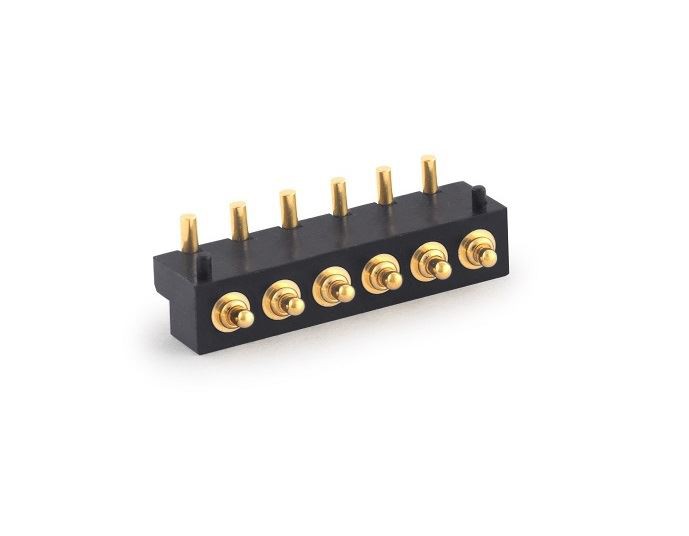
The rapid development of the market has promoted the technological innovation of the Pogo Pin connector and has also improved the design level and processing methods of the connector. Industry experts said that semiconductor chip technology has gradually become the technological driving force for the development of connectors at all levels of interconnection. For example, with the rapid development of 0.5mm pitch chip packaging towards 0.25mm pitch, level I interconnection (inside the IC device) and The number of device pins for level II interconnection (device-board interconnection) ranges from hundreds to thousands of lines.

In recent years, the use of optical fiber connectors, USB2.0 high-speed connectors, wired broadband connectors, and micro-pitch connectors in various portable/wireless electronic devices has gradually increased, and higher-speed USB3.0 has appeared in On the market. Therefore, the market usage hotspot of the connector is also changing at any time.
The electronic process of global enterprises and markets is gradually accelerating. Under the financial crisis, the Chinese government has increased investment in the three-network integration, smart grid, automobile, and rail transit industries. It can be seen that the market is very The current requirements are getting higher and higher; from the perspective of consumer electronics, such as the hot use of Internet TV, they involve many antenna applications, and TV system manufacturers need to set up antennas within a very small distance.

Connector miniaturization and energy saving are important directions for the development of the home appliance industry; the complex body control and remote communication functions in the automotive electronic system put forward higher requirements and challenges for miniaturization, intelligence, environmental protection, and high reliability of the connector.