
How to provide a suitable Pogo pin solution?
The detailed demand information will help us provide reliable product solutions and recommended solutions.
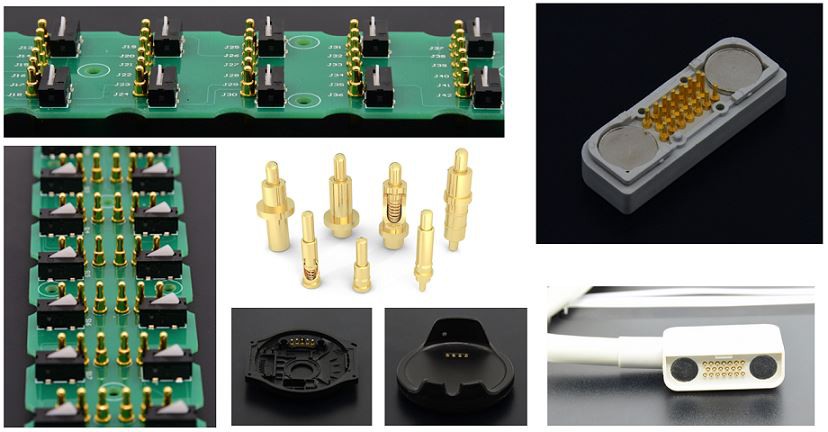
To provide a more reasonable offer, we need to know more Confirmation of product information:
Note:
1. Product terminal application information, application scenarios, and application environment;
2. Product functional item requirements: charging function (current / voltage), information transmission function;
3. Reliability requirements of the product: mechanical performance, environmental performance, electrical performance;
4. The application space of the product, Layout, etc...
5. Requirements for other special characteristics of the product;

The company has launched a new generation of magnetic resonance space wireless charging/power supply technology - "recharge". This technology leads the industry in terms of charging distance, spatial freedom, and energy conversion efficiency: it can achieve a charging distance of about 50cm at the farthest, and can reach about 100cm with relays; it can realize one-to-many wireless charging in a three-dimensional space, the system energy transmission efficiency can reach up to 90%.

A company that commercializes wireless charging technology solutions, and cooperated with OPPO to launch the world's first air-to-air charging the mobile phone with the possibility of mass production. The generation of wireless charging technology that is contact-type and must be point-to-point charging has provided excellent wireless charging solutions for leading enterprises in many industries (consumer electronics, industrial intelligent manufacturing, medical,

With the development of mobile phone charging technology, most smartphones now use fast charging solutions. We are familiar with OPPO VOOC flash charging, Qualcomm QC fast charging, Huawei SuperCharge charging, and so on.
So which is better, high-voltage fast charging or high-current fast charging?
According to the power P = current (I) x voltage (U), increasing the charging power of the mobile phone is nothing more than increasing the charging current or increasing the charging voltage, or both.
At present, fast charging includes high-voltage fast charging and high-current fast charging. The representative of high-voltage fast charging is Qualcomm QuickCharge fast charging technology. Qualcomm finally gave the QC 4+ fast charging head at the second Snapdragon Technology Summit not long ago. It can be seen from the parameters that Qualcomm QC 4+ supports fast-charging up to 27W, and the output power is 5V/3A, 9V/3A, 11V/2.4A, 12V/2.25A. From the technical parameters, Qualcomm QC 4+ is still a high-voltage fast Charging scheme, the maximum current does not exceed 3A.
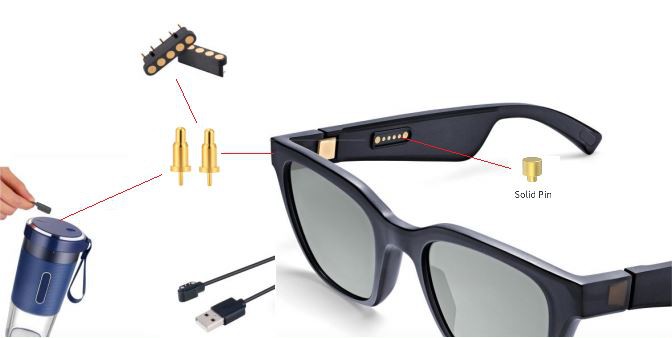
The representative of the low-voltage and high-current fast charging solution is OPPO's VOOC flash charging, which uses a rated charging power of 5V/4A about 20W, and the measured charging power can reach more than 19W. It is the fastest charging technology at present. According to the actual In terms of charging experience, OPPO's VOOC flash charging technology generates very low heat during the charging process, and the body is only warm.
In the past two years, with the maturity of fast charging technology, most fast charging (flash charging) have adopted low-voltage and high-current fast-charging solutions, including Huawei's fast-charging solutions, which have shifted from high-voltage fast charging to low-voltage high-current fast charging.

Qualcomm's QC 4+ is one of the few fast charging solutions that still insist on high-voltage fast charging. To say which of the two fast-charging solutions is better, the low-voltage and high-current fast charging solutions are better. The most obvious daily experience is fast charging. At the same time, the calorific value of charging is also low.
The voltage of low-voltage and high-current fast charging is mostly around 5V, and the voltage of the mobile phone battery is more matched with this data, so the power conversion efficiency is higher when charging the mobile phone with low-voltage and high current.

Because most of the energy loss during the charging process is in heat generation, the lower the heat generation, the higher the conversion efficiency, while the high-voltage fast charging solution does not have this advantage, and the heat generated during the charging process is significantly higher.

In addition to low-voltage high-current fast charging and high-voltage fast charging, there are also fast-charging technologies that use a compromise method, and the voltage and current can be increased a little to achieve the same charging power.
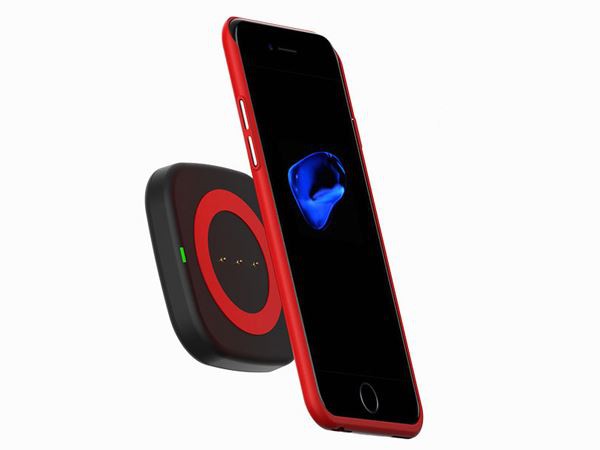
Qualcomm's QuickCharge fast charge supports this feature. For example, the latest QC 4+ supports a 12V/2.25A fast charge and also has a 9V/3A gear, but even this compromise method is not necessarily the power conversion efficiency. There is a low-voltage fast charge and high, as for why Qualcomm insists on the high-voltage fast charge, the author does not know.

It can be seen from the above that although there are various names of fast charging solutions on the market, the real fast charging solutions are only high-voltage fast charging and high-current fast charging. When the fuselage has low heat and other advantages, it began to spread gradually.
In the future, with the breakthrough of technology, there may be an extremely fast charging solution with high voltage and high current.