
How to design a charging Pogo pin for TWS Earbuds?
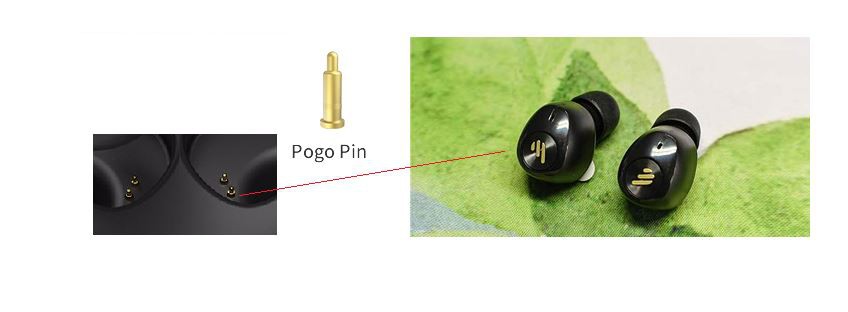
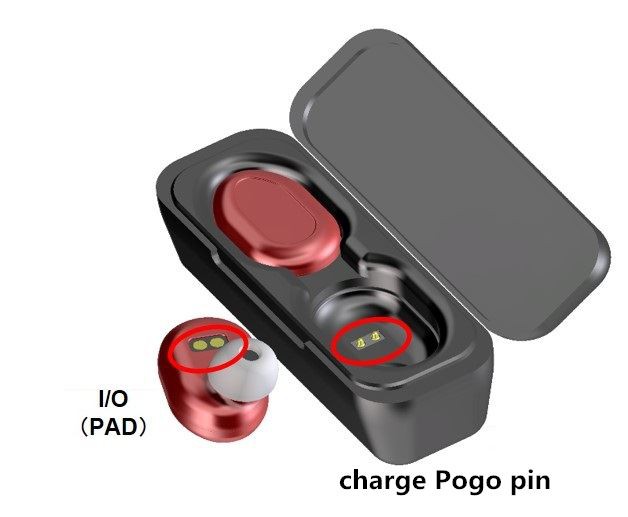
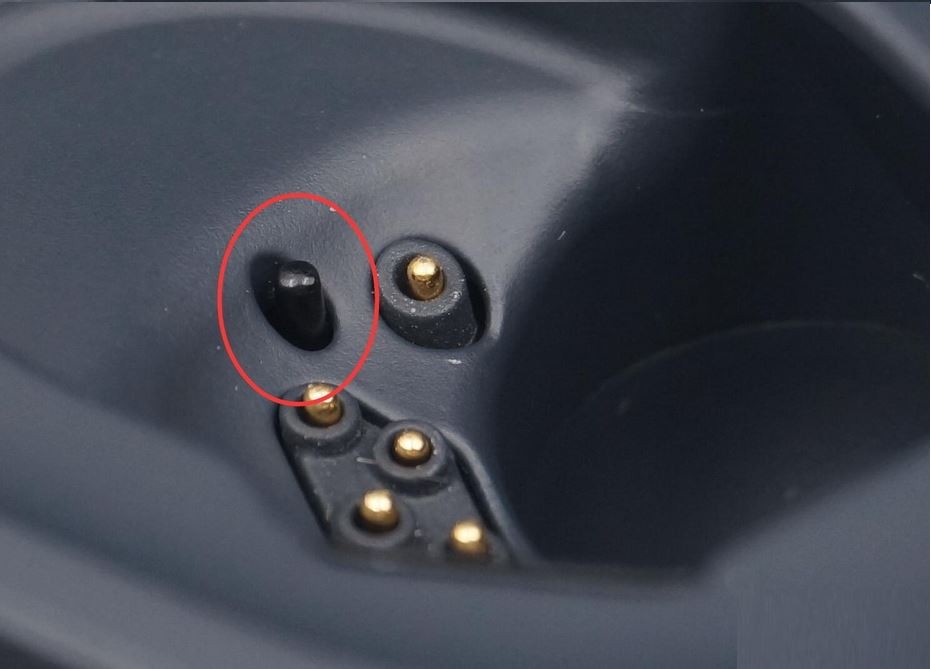
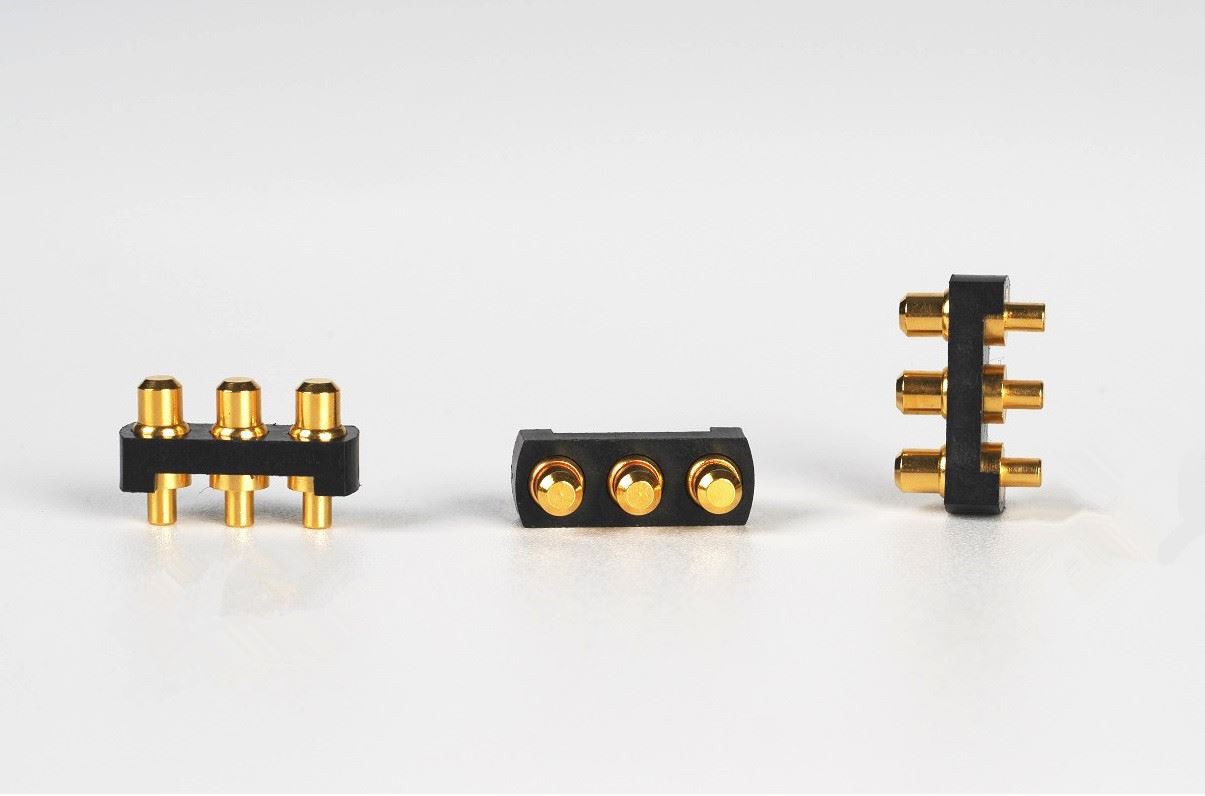
TWS Wireless Bluetooth headset is one of the smart wearable products favored by men, women, and children in recent years. It is small and exquisite, easy to charge, and has different shapes. It can be charged by placing it in the charging compartment. One of the core components in the TWS Bluetooth headset charging compartment is the pogopin pogo pin. TWS earphones can be charged through contact between the female end of the pogo pin and the male end in the charging compartment. 80% of the brands on the market choose to use the pogo pin.
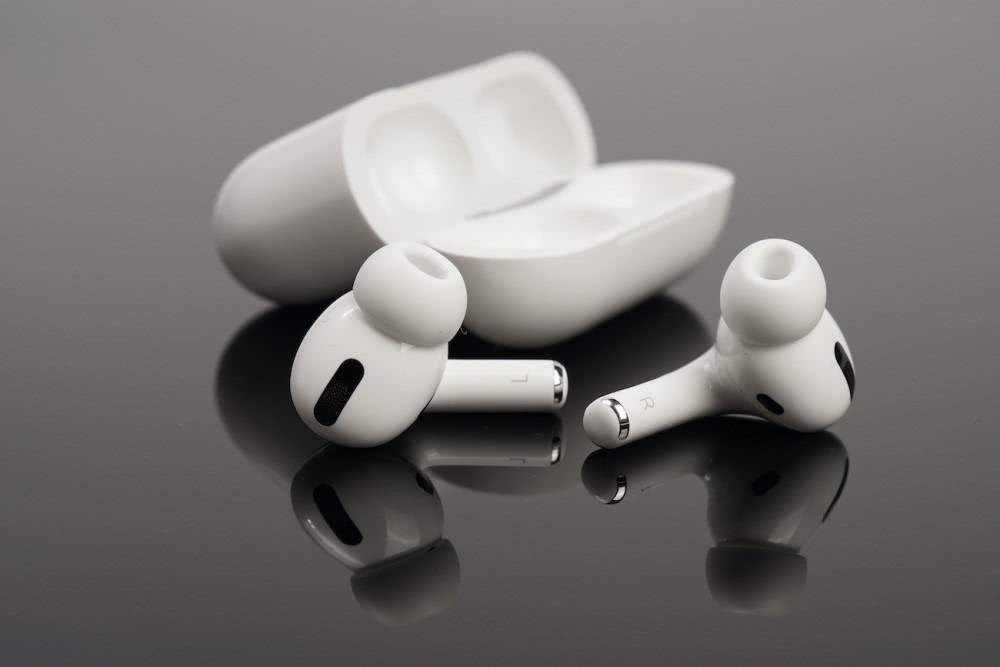
The TWS headset charging box is an ideal low-power wireless charging scenario. The TWS wireless Bluetooth headset that supports wireless charging has a built-in wireless charging receiving module in the charging box, which can be placed on the wireless charger for charging like a wireless charging mobile phone, realizing wireless charging. The "truly wireless" function of Bluetooth + wireless charging has a better user experience and is considered to be the ultimate form of TWS true wireless Bluetooth headset.

Now TWS earphones are roughly divided into semi-in-ear types with long handles and cochlear-type bean sprout shapes in the design of the headphone head. The shape of earphones is relatively limited, so the design of charging and charging has become a breakthrough point. The picture is right The charging compartment has made a little innovation, using a two-color injection molding process, a dark and transparent appearance, and internal texture design, and with the power display, creating a high-quality, high-tech feeling!

How to Overcome Seven Design Challenges of TWS Headphones?
Here are some tips to help solve some of the toughest challenges in TWS headphone design, from minimizing power loss to extending standby time.
Since the release of Apple AirPods in 2016, the true wireless stereo (TWS) market has grown by more than 50% annually. The makers of these popular wireless earphones are rapidly adding more features (noise cancellation, sleep, and health monitoring) to differentiate their products, but adding all these features can be difficult from a design engineering standpoint. In this article, I will review these challenges.
Challenge 1: Minimize power loss through efficient charging
A major challenge with wireless earphones is achieving a longer total playback time when the earbuds in the battery compartment are fully charged. In this case, a longer total playtime translates to the number of cycles a case can charge the earbuds over their entire lifetime. The goal is to enable efficient charging while minimizing power consumption from the charging case to the earbuds.
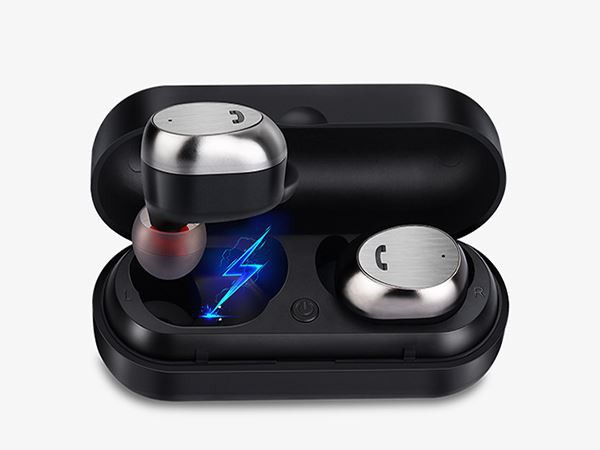
The charging case outputs a voltage from the battery as an input to charge the earbuds. The typical solution is a boost converter with a fixed 5V output, which is a simple solution but does not optimize charging efficiency. Because earbud batteries are so small, designers often use linear chargers. When using a fixed 5V input, the charging efficiency is very low - about (V in - 5 bats) / 5 in - and produces a large voltage drop on the battery. Plug in an average 3.6V Li-Ion battery voltage (half-discharged) and the 5V input is only 72% efficient.
Conversely, using an adjustable-output boost or buck-boost converter in the charging case produces a voltage only slightly above the typical voltage range of earbuds. This requires communication from the charging case to the earbuds, which allows the output voltage of the charging case to dynamically adjust to the earbuds' battery as the voltage increases. This will minimize losses, increase charging efficiency, and significantly reduce heat.
Challenge 2: Scale down the overall solution without removing functionality
The second challenge is the general challenge of small battery design - how to design a battery that is both small in size and large in function. The simple solution here is to choose a device with more integrated components. E.g:
A high-performance linear charger that integrates additional power rails to power the main system block and is a good choice for wireless headphones.
For power-hungry, low-voltage modules such as processors and wireless communication modules, swap rails are the best choice for efficiency.
For sensor blocks that don't require much power but do need low noise, consider using a low dropout regulator.
If your wireless headphones integrate analog front-end sensors to measure blood oxygen and heart rate, you may also need a boost converter.
Integrate additional power rails into the charger to make its form factor smaller. However, there is always a trade-off between integrating more for smaller sizes and using more discrete integrated circuits (ICs) for flexibility.
Challenge 3: Extend standby time
Standby time is important because consumers expect headphones to play music even after long periods of inactivity outside the charging case. Consider using higher-energy-density lithium-ion batteries in earbuds, which typically have higher voltages, such as 4.35 volts and 4.4 volts, so that more energy can be stored. A full charge also increases standby time. A battery charger featuring a small termination current and high accuracy will help extend the standby time. If there is a large change in the termination current specification, you may end up with a higher termination current, which can lead to premature termination and a low battery.
A 41mAh battery terminated at 1mAh versus 4mAh. If the nominal 1mA termination current varies widely and actually terminates at 4mA, the 2mAh battery capacity will remain unexploited. Lower termination current and higher accuracy increase effective battery capacity.
Low quiescent current (IQ) is also important to prolong standby time in different operating modes. A charger IC with a power path and near-zero ship mode current will prevent the battery from draining before the product reaches the consumer, enabling immediate use. The power path requires placing metal-oxide-semiconductor field-effect transistors between the battery and the system to manage the system and battery paths, respectively.
When the earbuds are playing music or idling, the current consumption of the system needs to be as small as possible. Finding a charger with low I also minimize the I of the system. For example, battery chargers often require a negative temperature coefficient (NTC) resistor network to measure battery temperature.
Some solutions on the market cannot turn off the NTC current when working in battery mode. They either leak too much (leakage can exceed 200µ when the NTC network has 20 kΩ) or require extra I/O and turn it off with a switch.
Challenge 4: Security Design
Battery pack manufacturers often have guidelines for charging batteries at different temperatures, and batteries must remain within these safe operating areas during use. Some require a standard profile where charging stops outside the hot and cold temperature boundary. For example, other companies may require specific information from the Japan Electronics and Information Technology Association. To comply with these temperature profiles, look for a profile with the necessary built-in or some I twoC programmability. The BQ21061 and BQ25155 have registers to set the temperature window and actions to be taken within a specific temperature range.
Battery Undervoltage lockout (UVLO) is another safety feature that prevents the battery from being over-discharged and thus stressed. Once the battery voltage falls below a certain threshold, UVLO cuts off the discharge path. For example, for a Li-Ion battery charged at 4.2V, a common cutoff threshold is 2.8V to 3V.
Challenge 5: Ensuring System Reliability
Low system reliability caused some microprocessors to get stuck when the user plugged in the adapter. While this is rare, it requires a system power reset so that the microprocessor can restart and return to normal. Some battery chargers integrate hardware reset watchdog timer that performs a hardware reset or power cycle (if not) two C transactions are detected sometime after the adapter is plugged in by the user. After a system reset, the power path is disconnected and reconnected to the battery and system.

Similar to the hardware reset watchdog timer, the traditional software watchdog timer also helps to improve system reliability by resetting the charger register to its default value after a period of no transactions in the twoC. This reset prevents the battery from being charged incorrectly when the microprocessor is in a faulty state.
Challenge 6: Monitor the Best Operating Areas
The sixth challenge is to monitor system parameters, which can be efficiently achieved by a built-in high-precision analog-to-digital converter (ADC). Measuring battery voltage is a good parameter because it provides a convenient, albeit approximate, representation of the battery's state of charge. As a rule of thumb, if the state of charge required by the wireless headset is higher than ±5%.

The high-accuracy built-in ADC also allows you to monitor and take action on battery and board temperature during charging and discharging. Other parameters the charger can monitor include input voltage/current, charging voltage/current, and system voltage. The built-in comparator also conveniently helps monitor specific parameters and send interrupts to the host. If the parameter is within the normal range and the comparator is not triggered, the host does not have to constantly read the parameter of interest. The BQ25155 is a good example to monitor system parameters as it has an ADC and comparator.
Challenge 7: Simplify wireless connectivity
Some wireless earphones have a feature that displays the charging status of the earphones and the charging case on the smartphone when the earphones are in the charging case and the lid is open. To support this, the earphones must report the state of charge as soon as they are plugged into the case, even if the battery is depleted. The main chip must be awake to report the charging state, so in this case, the external power source must be powering the earbuds. A charger with a power path enables the system to get a higher voltage from the VBU while charging the battery at a lower voltage.
Several features of the wireless headphone charger (such as ship mode, system power reset, battery UVLO, accurate terminal current, and instant charge status reporting) are not possible without the power path capability, which requires both battery and system A MOSFET to be placed in between to manage the system and battery paths separately. Figure 5 illustrates the charger with and without a power path.
Switching and linear chargers can be seen in the charging case design depending on the battery size and charging rate. Switching chargers are more efficient and generate less heat, which is important for high currents of 700mA and above. Switching chargers usually come with an integrated boost or follow function that boosts the battery voltage and provides the input voltage for charging the earbuds. Linear chargers are also a good choice for low current level battery boxes as they offer low cost and low IQ.
Rechargeable hearing aids present similar design challenges. They are usually smaller than earbuds so that they are invisible and therefore require more power integration in a smaller area. They also require low-noise power rails, including a switched capacitor topology, for superior audio clarity.