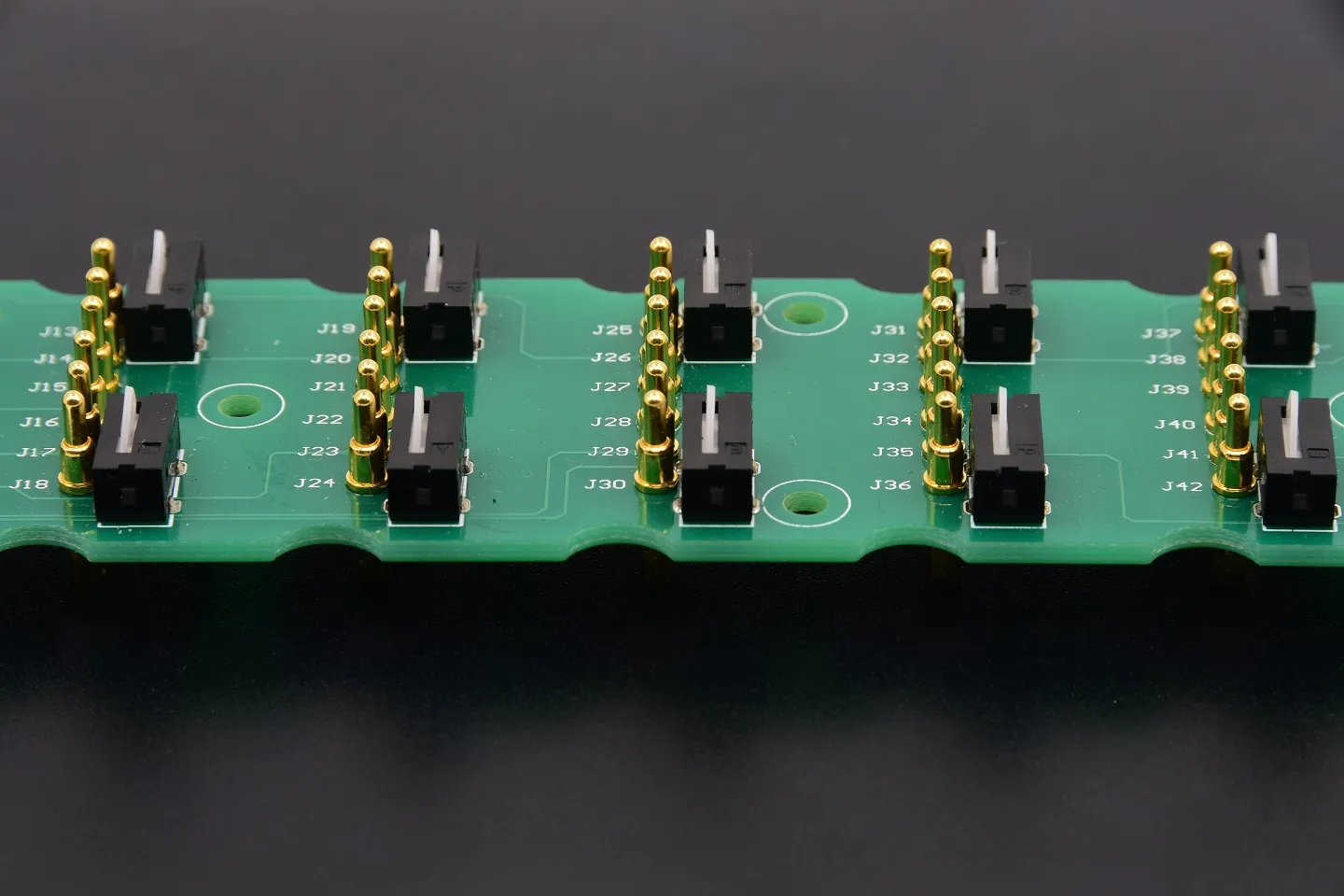
How to choose a suitable Pogo pin connector for hardware applications?

Here are some tips for choosing a suitable pogo pin connector for hardware applications:
- Consider the number of connections needed. Pogo pins come in various configurations with different numbers of pins, so choose one that has enough pins for your application. Common options are 2-pin, 4-pin, 6-pin, etc.
- Look at the pitch (spacing) between the pins. The pitch needs to match the spacing of the contact pads on your PCB. Common pitches are 1mm, 1.27mm, 2mm, 2.54mm, etc.
- Check the stroke/travel range of the pin. This is how far the pin can extend to make contact. A longer stroke allows more variability in PCB position. 0.5-1mm stroke is common.
Consider the pin material and plating. Gold-plated pins provide the highest conductivity and corrosion resistance. Other options like nickel, copper, or tungsten may be suitable depending on cost and longevity needs.
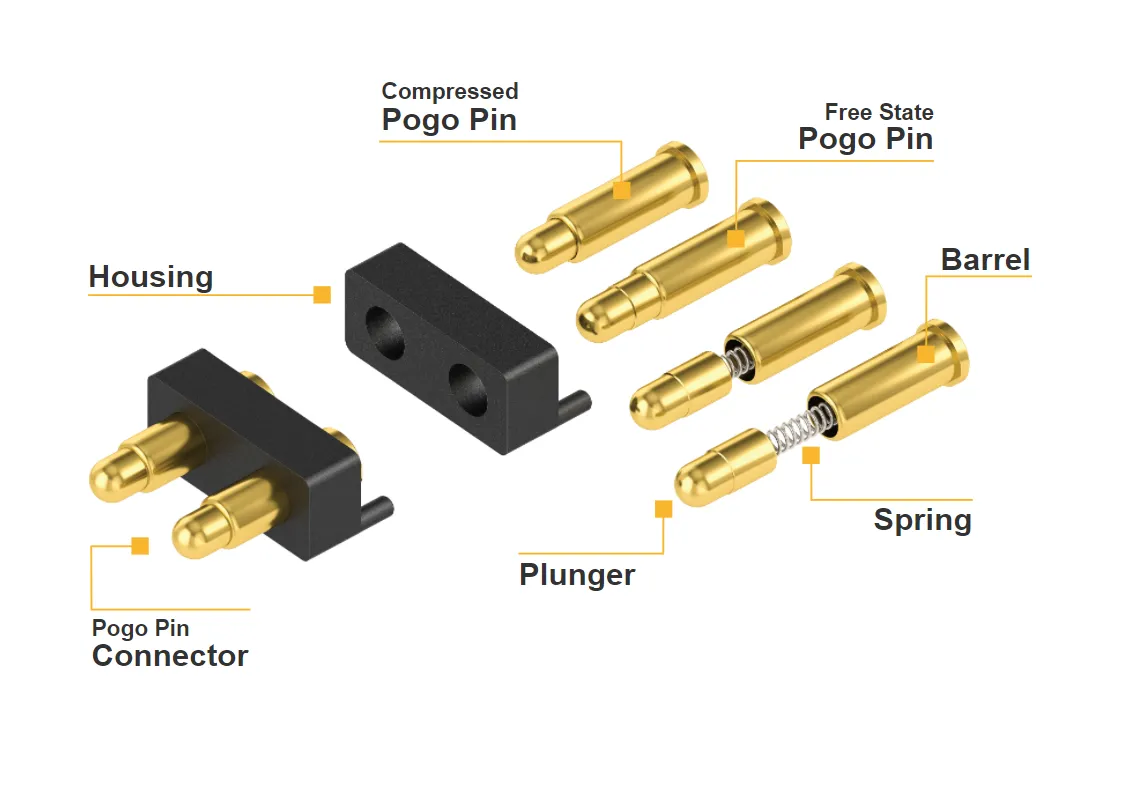
Choose the appropriate pin diameter. Larger diameters give more robust contact. 0.5mm, 0.64mm, and 1mm are common sizes.
- Look for pogo pins rated for high cycle life if durability is important. Ratings of 100,000+ cycles indicate better longevity.
- Consider the housing material and retention method. Nylon or PBT housings with press-fit or solder pins work well. Avoid loose slip-in style retention.
- Check the rated current per pin. Choose a pin rated for at least the maximum expected current.
- Get an assembly with guide plates or pedestals if the PCB needs precise alignment.
Test a sample pin assembly with your PCB to verify good electrical connectivity before fully committing.